The First City: The Neolithic Jades of Liangzhu
Venturing 5,000 years into China's past through the massive hydraulic engineering and intricate jade carvings of the Liangzhu ruins — free museum, ticketed park, Metro Line 2 plus shuttle.
Published
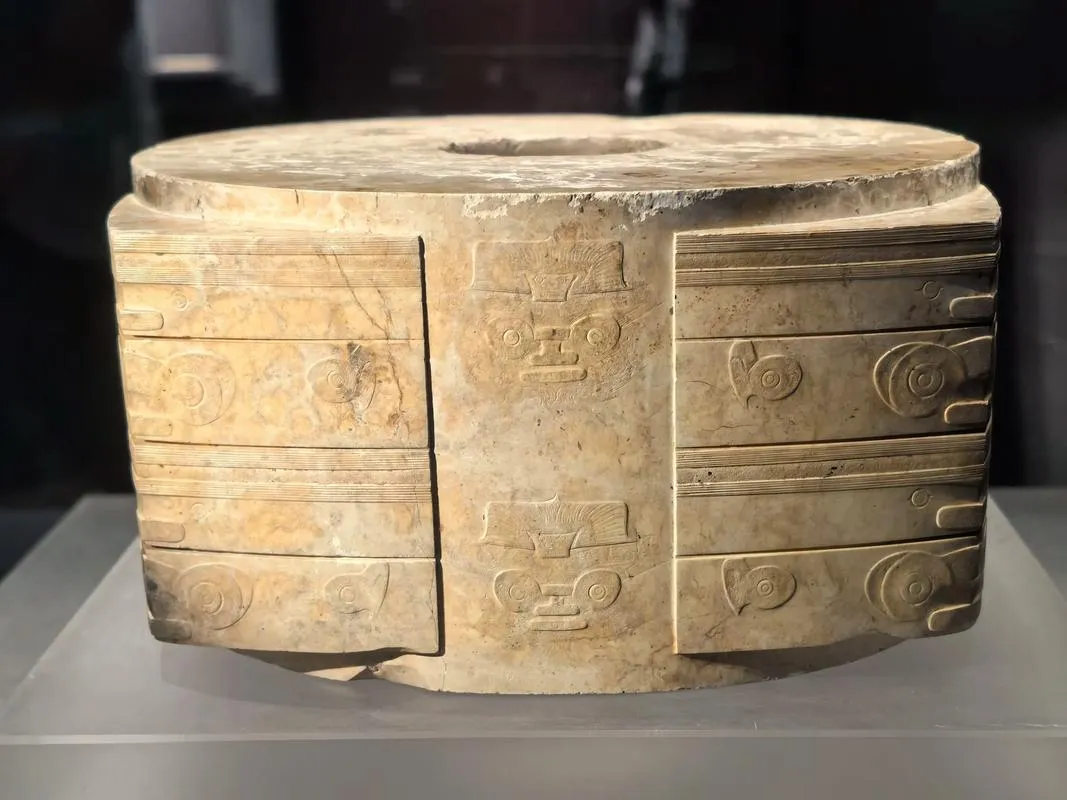
Liangzhu (良渚, Liángzhǔ) near Hangzhou pairs a free jade museum with a ticketed earthen ruins park — Neolithic cong masks, palace mounds, and ancient dams — for archaeology texture, not stone temples. Reserve both on the Liangzhu City WeChat or Alipay mini-program; take Metro Line 2 to Liangzhu Station, then the tourism shuttle.
What do you actually see?
At Liangzhu Museum: soft-lit jade cong cylinders with microscopic deity-beast masks — square outside, circular hollow inside — carved without metal tools. At the Ancient City Ruins Park: grass, marsh, and low earthen mounds, not towering stone monuments. Stand on Mojiaoshan's palace platform and look out over a hydraulic system of eleven earthen dams that once fed canals as streets.
Why does jade matter more than bronze here?
Fifty centuries ago Liangzhu reshaped the Yangtze delta with dams, rice paddies, and jade precision that still unsettles archaeologists. The cong's square-and-circle dualism later shaped Chinese cosmology; the dam labor shows a centralized state before bronze in the central plains. This is deep-root civilization texture — patience ground into stone with sand and bone drills — not a warrior-pit spectacle.
How is this different from a typical museum day?
The museum and ruins sit about four kilometers apart. Skip the park and you miss the engineering argument; skip the museum and the jade faces stay abstract. There is no single trophy room. The disappointed traveler usually expected Forbidden City scale and left without walking the mounds or buying the on-site sightseeing shuttle.
When should you go, and how long?
Cooler spring and autumn (roughly March–May and September–November) make the outdoor park easier underfoot. Plan a half to full day with shuttle time between sites. Soft pair another Hangzhou morning with West Lake myths only if you keep Liangzhu as its own archaeology half — do not race both before lunch.
Hours, tickets, and how to get there?
As listed on the official visit pages at liangzhusite.com and museum notices at lzmuseum.cn (checked October 2026):
- Liangzhu Museum: Free, real-name reservation required. Open 09:00–17:00, last entry 16:30; closed Mondays except national holidays. Address: No. 1 Meilizhou Road, Yuhang District.
- Liangzhu Ancient City Ruins Park: Full-price ticket ¥60 (half-price ¥30 for eligible groups). Open 09:00–17:00, last entry 16:00. Daily visitor cap applies; reserve in advance.
Book both via the WeChat / Alipay mini-program "良渚古城" (Liangzhu City). Take Metro Line 2 to Liangzhu Station (良渚站); for the museum, transfer to tourism buses such as 1223M or 430M; for the ruins park, use dedicated shuttles such as 7437M / 1222M toward the south visitor center (confirm stop names on the day). The park is huge; buy the on-site sightseeing shuttle at the entrance rather than trying to walk every mound.
Who is this for — and who should skip?
Come if you want Neolithic jade and earth dams with reserved tickets ready. Skip if you need standing palace halls or a walk-up free afternoon without WeChat booking. Start at the museum so the cong faces explain the mounds that follow.
More from Hangzhou
- history / 5 min readAn exploration of how legend and literature built West Lake, from the tragic spirits of Leifeng Pagoda to the rain-soaked stones of the Broken Bridge — with verified pagoda hours and free lakeside access.
- food / 6 min readHigh in the hills of Meijiawu, the spring race to pick and fire Hangzhou's legendary tea begins before the April rains — free terraces, harvest season, and a clear scam warning.
- food / 5 min readHangzhou's local food, or Hangbang Cai, is a study in understatement—balancing subtle sweet-sour notes with stories of old poets and emperors, best anchored near West Lake and Hefang Street.