Ink and High Notes: Tracing the Painted Faces of Peking Opera
Step into historic wooden guildhalls to witness Peking Opera painted faces and falsettos — Huguang Guildhall and Liyuan Theatre anchors, soft on unverified showtimes.
Published
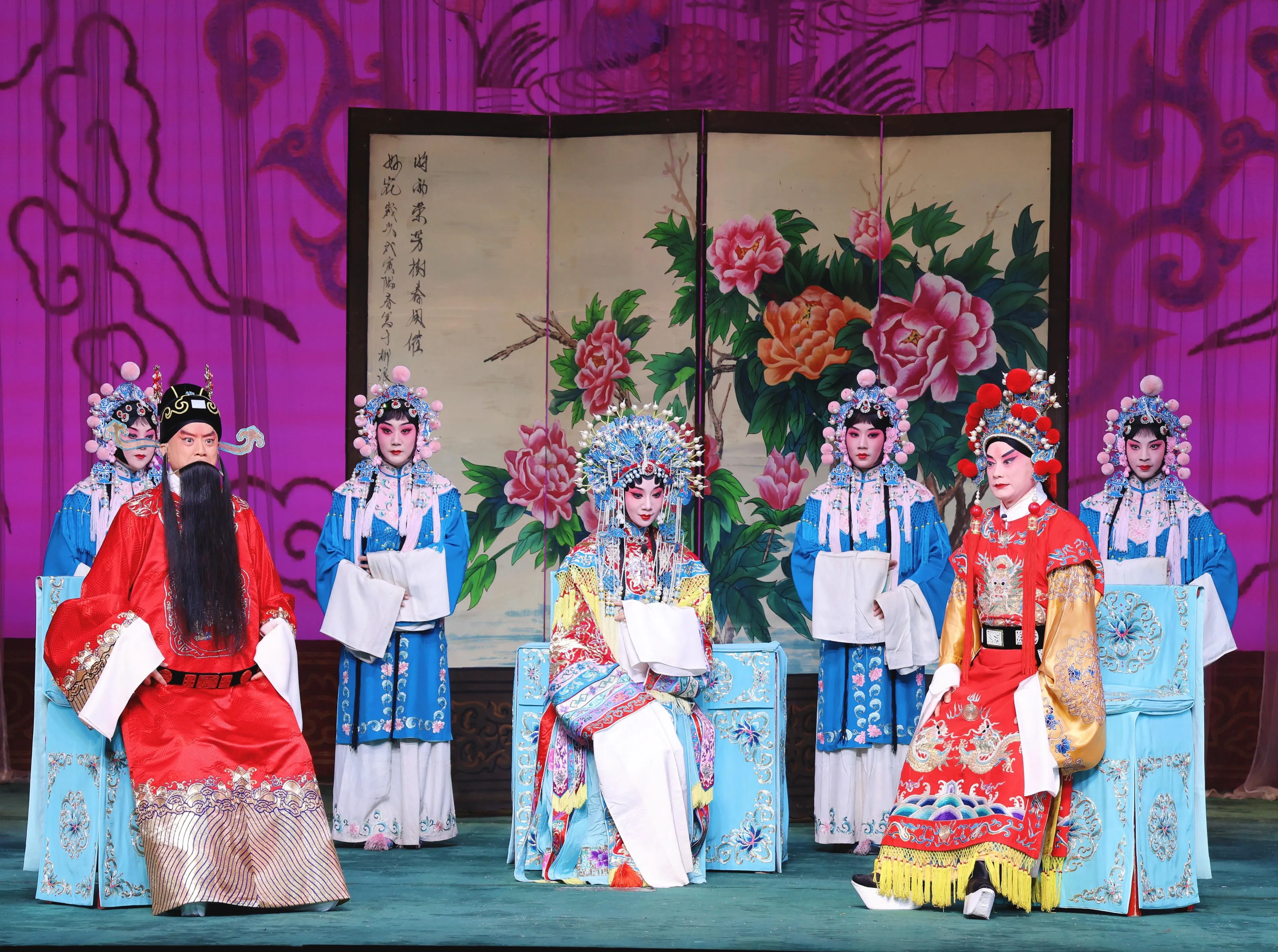
Peking Opera (京剧, Jīngjù) in Beijing is painted-face codes, jinghu falsetto, and acrobatic spear work best felt in historic wooden halls. Huguang Guildhall near Hufangqiao metro keeps Qing courtyard atmosphere; Liyuan Theatre in Qianmen offers clearer first-timer shows with English support — confirm same-day showtimes rather than trusting stale schedules.
What do you actually see and hear?
A figure in heavy gold-embroidered silk spins with triangular battle flags flaring from the back; the face is a geometric canvas of black, red, and white — a mask that reveals loyalty, cruelty, or cunning before a note is sung. Painted faces (脸谱) are a code: bright red for loyalty and courage, black for ferocity and honesty, white for treachery. A whip means a horse; circling swords mean a grand battle across miles. The jinghu (京胡), a two-stringed bamboo fiddle, drives every footstep and spear thrust with a nasal buzz under piercing falsetto.
Why seek a guildhall instead of a modern cinema stage?
Guildhalls (会馆) were Qing meeting houses for merchants and scholars from other provinces; wooden balconies look down on a central stage. Huguang Guildhall (湖广会馆), founded in 1807, still has creaking pine pillars and red lattice windows that once echoed Mei Lanfang. Sitting with gaiwan tea and melon seeds puts you closer to the era when theater was civic glue. Modern theaters stage the art; historic wood carries the weight.
How should a first-timer choose between Huguang and Liyuan?
Huguang is the historic-atmosphere pick. Liyuan Theatre (梨园剧场) inside the Qianmen Jianguo Hotel offers a well-curated nightly showcase with English support and, when scheduled, a chance to watch actors apply makeup beforehand — sharper for travelers who need clarity over creaking courtyards. Both are valid; they answer different first nights.
When should you go, and how long?
September to November is a comfortable season for evening shows. Plan the performance itself plus travel — most evenings run as a single block rather than a day-long festival. Peking Opera was traditionally noisy; shout hǎo (好) when the house does.
Hours, tickets, and how to get there?
Ticket bands commonly land around ¥80–280 depending on seat distance — confirm the night's board. Huguang Guildhall at No. 3 Hufang Road, Xicheng: Metro Line 7 to Hufangqiao (虎坊桥); follow street signs for 湖广会馆 (local signage may name Exit C or D). Liyuan Theatre sits inside the Qianmen Jianguo Hotel on Yong'an Road.
Soft fact — showtimes (checked October 2026): venue websites and ticket aggregators list evening programs (often around 19:00–19:30 starts), but no single stable municipal https timetable was treated as authoritative here. Confirm date, language support, and start time on the venue's current booking channel the day you go — programs and dark nights change.
Who is this for — and who should skip?
Come if you want painted-face codes and percussion-driven movement. Skip if you expect Broadway narrative pace or soft Western singing — the falsetto and brass cymbals are the point.
More from Beijing
- history / 5 min readDiscover the cosmic architecture and dynastic politics of China's imperial heart, escaping the tourist corridors to explore the quiet western chambers and halls — with verified Palace Museum hours and booking.
- history / 5 min readUnveil the blue-glazed tiles and imperial ritual architecture of the Temple of Heaven — park vs combo tickets, monument hours, and Tiantandongmen metro.
- food / 5 min readPeking roast duck is a meticulously choreographed performance of fire, steel, and taste — Qianmen and Hepingmen area anchors, no invented restaurant hours.