Beneath the Grey Eaves: The Everyday Poetry of Beijing's Hutongs
Wander past the grey brick courtyards of Beijing's ancient lanes, where daily life unfolds under laundry lines and scholar trees — free residential walks around Wudaoying.
Published
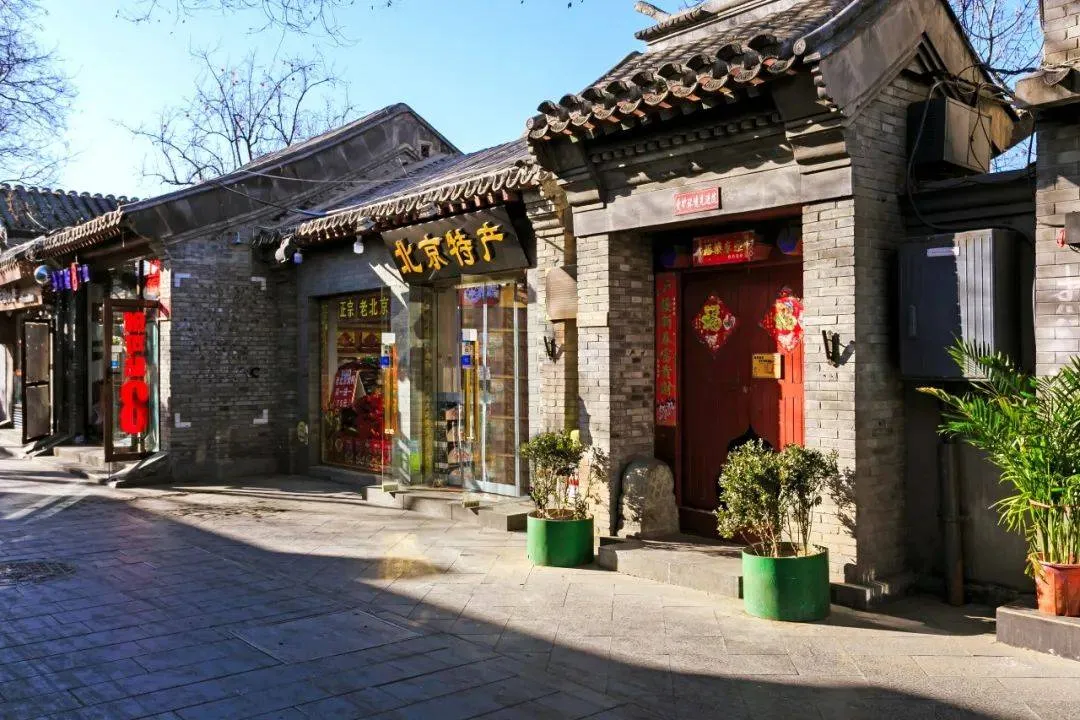
Beijing hutong (胡同, hútòng) life is grey brick lanes and shared courtyards, not a single ticketed museum. Walk Wudaoying for cafes beside residential siheyuan, then slip into quieter side alleys south toward the Bell and Drum Towers — free to wander if you keep voices low and cameras off private gates. The poetry is domestic; it asks for quiet feet.
What do you actually see in a living lane?
Thick grey brick walls, curved roof tiles, and heavy red-lacquered wooden gates flanked by stone mounting blocks. Many siheyuan (四合院) have been divided into crowded tenement flats with shared kitchens and outdoor plumbing, but the core architecture remains. In quieter lanes the street is an extension of the living room: elderly residents on mismatched wooden chairs, green tea in glass pickle jars, Chinese chess, pajama-clad neighbors at communal sinks, geraniums in rusty biscuit tins, laundry on low wires under scholar trees.
Why do some lanes feel like shops and others like homes?
These passages date to the Yuan Dynasty as the cellular structure of imperial Beijing. Tourist hubs like South Luogu Alley paved over old lanes with neon souvenir stalls and bubble tea. A few blocks away, near the northern temples, authentic rhythm persists. Wudaoying Hutong (五道营胡同) is a laboratory of modern urban preservation: traditional grey façades housing third-wave coffee shops and bookstores next to courtyards where retirees boil cabbage. The friction is surprisingly gentle when coffee drinkers speak in whispers and elders watch with amusement rather than hostility.
How should you walk without turning homes into a set?
Leave the main commercial thoroughfares. Turn into tiny unnamed side lanes that branch off like capillaries. Keep voices low, especially during afternoon nap hours (~13:00–15:00). Do not peer into private siheyuan or photograph residents without consent. Avoid treating Nanluoguxiang's souvenir spine as the whole story.
When should you go, and how long?
September to November is the kindest walking season. Plan one to two hours for Wudaoying plus a quieter residential peel — longer if you sit for coffee. Daylight is the polite window; there is no ticketed closing time.
Hours, tickets, and how to get there?
Walking residential hutongs is free — these are neighborhoods, not a gated scenic park. No official https timetable governs lane access (checked October 2026). Start at Wudaoying Hutong for a mix of cafes and living courtyards, then peel south into quieter residential alleys, or drift toward the maze near the Bell and Drum Towers.
Take Metro Line 2 or Line 5 to Yonghegong (雍和宫); Exit G puts you across from Wudaoying's eastern mouth.
Who is this for — and who should skip?
Come if you want everyday poetry under grey eaves — laundry, chess, and courtyard gates. Skip if you expect a curated museum circuit or English signage on every gate. For the edible side of the same alleys, see hutong street food; for a paced multi-day frame, see the three-day itinerary.
More from Beijing
- history / 5 min readDiscover the cosmic architecture and dynastic politics of China's imperial heart, escaping the tourist corridors to explore the quiet western chambers and halls — with verified Palace Museum hours and booking.
- history / 5 min readUnveil the blue-glazed tiles and imperial ritual architecture of the Temple of Heaven — park vs combo tickets, monument hours, and Tiantandongmen metro.
- food / 5 min readPeking roast duck is a meticulously choreographed performance of fire, steel, and taste — Qianmen and Hepingmen area anchors, no invented restaurant hours.