Precipice of the Gods: The Vertical Paths of Mount Hua
A guide to scaling Mount Hua's sheer granite cliffs, detailing the West and North Peak cableways, the infamous Plank Walk in the Sky, and why that plank route is temporarily closed for safety upgrades as of autumn 2026 — reconfirm before you climb.
Published
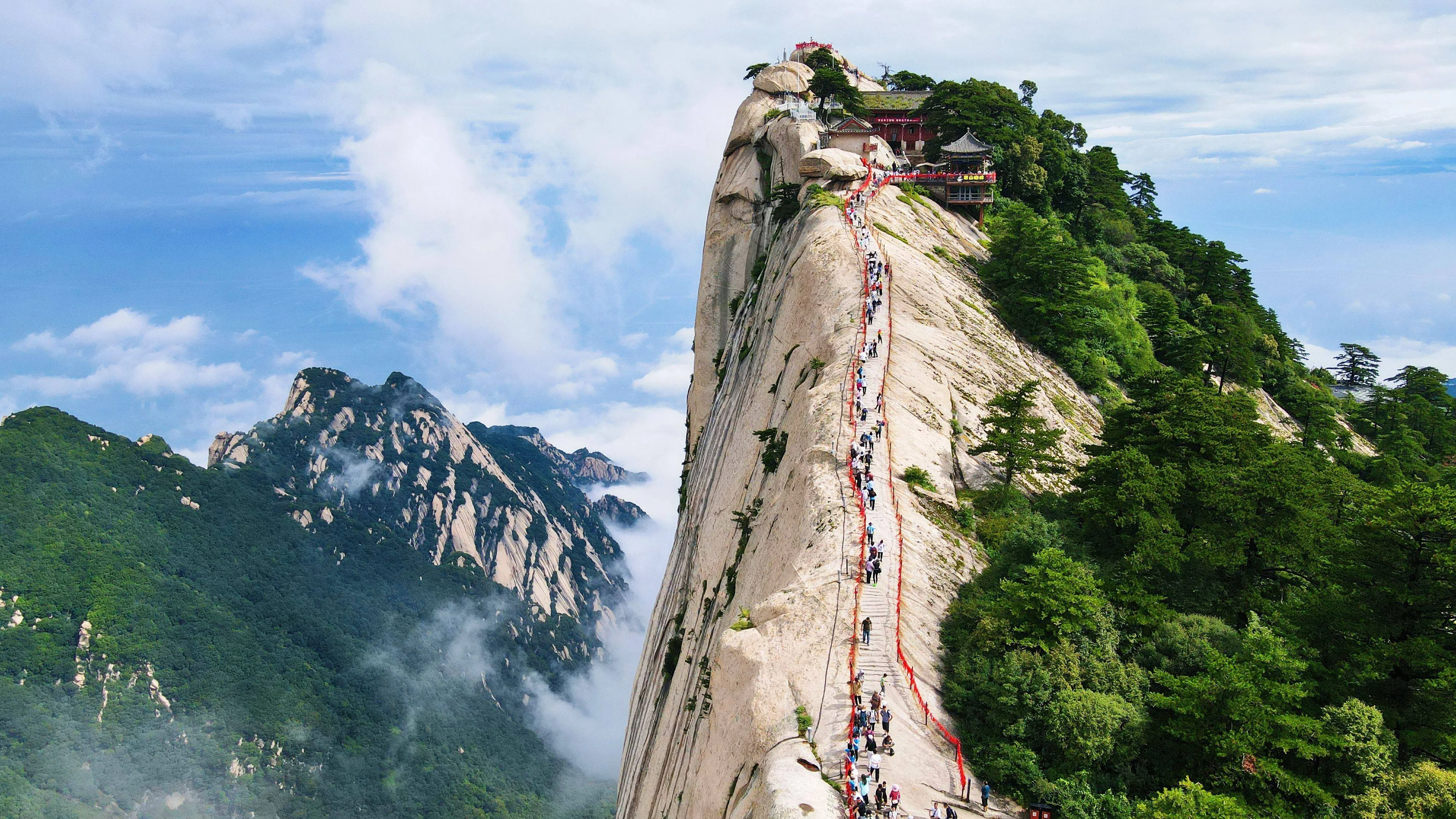
Mount Hua (华山) from Xi'an is a granite day trip of cableways, ridge trails, and Taoist summit temples — dramatic height without needing the old death-wish hike. As of autumn 2026 the South Peak Plank Walk and East Peak “Sparrow Flip” routes are closed for safety upgrades; plan the West-up / North-down loop and reconfirm adventure segments before you go.
Is the Plank Walk open?
Important — temporary closure: Scenic-area notices republished via official Weibo channels (checked October 2026) state that from 15 September 2026 the Plank Walk in the Sky (长空栈道) and Sparrow Flip (鹞子翻身) are paused for facility inspection and safety upgrades. Other summit routes remain open. Reopening will be announced only after inspection passes — check Huashan Scenic Area's WeChat / chinahuashan.com notices first. Soft pair: Wild Goose Pagoda if you prefer city temples over granite height the same trip.
What do you actually see without the plank?
Take the West Peak Cableway over granite valleys to the summit ridge, hike pine-lined trails to the South Peak (2,154 meters), continue toward East Peak viewpoints, and descend via the North Peak Cableway — a full loop with no backtracking. Taoist temples tuck onto ledges; cliff faces drop straight into cloud. Even without the plank, ridge walks deliver the vertical drama most visitors come for.
Why was this mountain famous for danger?
Taoist monks chose the summits because nobody else would go there — isolation was the point. The old Huashan Gorge Trail chisels thousands of steep stone steps into ridges with names like Thousand-Foot Precipice. Modern railings and two cableways removed the death-wish element, but your legs still know how far down it is.
Hours, tickets, and how to get there?
March–May and September–October are classic; winter ice and summer thunderstorms change trail safety and cableway hours. Peak-season park entry (commonly 1 March–30 November) published at ¥160 adult full price (¥80 half-price categories); winter off-season lower — confirm on scenic-area booking channels. Cableways are separate tickets; adult peak one-ways commonly list about ¥140 West Peak (Taihua) and ¥80 North Peak (Sante) (Mar–Nov 2026 boards). Soft note: ¥126 / ¥72 appear as temporary promo or student ~9-fold rates on some 2026 notices — not the default adult peak. List prices shift — buy only through official channels and reconfirm the morning you go.
Take high-speed train from Xi'an North Station to Huashan North Station (about 30 minutes), then the free green tourism shuttle to the visitor center. Visitor-center cableway entry commonly runs roughly 07:00–16:00 in peak season with cableway operations into early evening — check the day's notice.
Who is this for — and who should skip?
Come if you want granite height and Taoist ridge temples on a day trip. Skip the plank entirely if you have vertigo — even when open it is optional and can queue for hours. Skip the whole mountain if stairs, cableways, or temporary trail closures are off limits.
More from Xi'an
- history / 6 min readLooking beyond the massive crowds of Pit 1 into the profound logistics of Emperor Qin Shi Huang's mausoleum, exploring the individual expressions and archaeological mysteries of the clay soldiers.
- history / 5 min readA journey to the underground glass museum of Yangling, where miniature clay soldiers, animals, and servants reveal a completely different imperial ideology of the Han dynasty compared to the fierce Qin.
- food / 6 min readMoving past the main tourist drag of Beiyuanmen to discover the alleyways where locals eat Yangrou Paomo and Roujiamo, examining the ancient Islamic-Chinese fusion.