The Red Cauldron: Savoring the Tallow and Spice of Chongqing Hotpot
Communal, sweat-inducing, and thick with beef tallow, Chongqing's bomb-shelter hotpot is a sensory trial of chili and Sichuan pepper — Zhongshan Sanlu and Liziba anchors.
Published
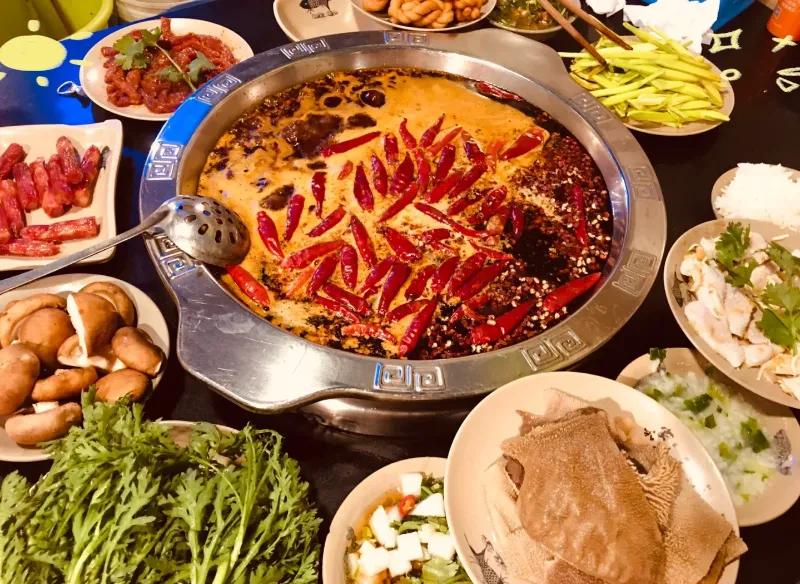
Chongqing hotpot (重庆火锅) is beef-tallow chili broth, nine-grid cauldrons, and ten-second tripe dips — often served in cool wartime bomb-shelter caves. Anchor around Zhongshan Sanlu and Liziba for shelter dining; order mild or medium spice, and treat individual shop hours as soft.
What should you order first?
The stars are offal that catch grease and spice. Fresh tripe (毛肚, máodù) follows the local “seven up, eight down” (七上八下) habit: lift and dip it in the furiously boiling center square seven or eight times, roughly ten seconds in all, until it curls and turns crisp. Much longer and it goes rubbery. Goose intestines (鹅肠) curl into crunchy ribbons just as fast. Beef, potato, and lotus root go into the gentler outer squares of the jiǔgōnggé (九宫格) nine-grid pot. Buffer with sesame-oil dipping sauce (油碟) mixed with raw garlic, plus cold beer or sweetened soy milk.
Why does the broth taste of tallow and chili?
Unlike mild herbal pots elsewhere, Chongqing's base melts solid bricks of beef tallow (牛油) with dried red chilis and Sichuan peppercorns into a bubbling glossy red sea. The nine-grid is a heat-control tool, not a multi-broth divider. Soft pair: morning xiaomian shows the same chili-oil grammar at breakfast volume.
Why eat inside a bomb shelter?
Wartime air-raid tunnels carved into sandstone stay cool year-round. Many 洞子火锅 (dòngzi huǒguō) restaurants now roar with clinking bottles under arched stone ceilings — steam rising toward damp rock that once sheltered grandfathers. Condensation drips; jackets come off; faces flush. There is no pretense on low wooden stools.
When should you go, and how much?
Spring and autumn are kinder outside; caves stay cool even in summer. A filling meal commonly lands around ¥60–120 per person depending on offal and meat — confirm the QR menu board. Soft fact — shop hours (checked October 2026): individual restaurants do not share a single official https timetable. Treat lunch through late evening as the practical window; weekends and holidays fill early.
Where to go, and how to get there?
Useful spines: clusters along Zhongshan 3rd Road (中山三路) and alleys near Liziba (李子坝) (Metro Line 2 Liziba) for cave dining. Look for bubbling red cauldrons and 洞子火锅 names. Many shelter shops lack English signage. Soft link: Liziba viewing platform sits on the same Line 2 stop if you want monorail theater before or after.
How spicy is “mild”, and what do you say?
Chongqing “mild” is hotter than most visitors expect. For a first meal, order a split yuanyang pot (鸳鸯锅) and ask for wei la (微辣) on the red side; if you cannot eat chili at all, ask for bu la (不辣) or eat from the clear side. Shops name their levels a little differently, so treat this table as a guide, not a standard.
| Say | Chinese | What it usually means | |---|---|---| | bù là | 不辣 | No added chili; some shops will only do this as a clear or tomato broth | | wēi wēi là | 微微辣 | “Extra mild”, offered by some shops below wei la | | wēi là | 微辣 | Mild by local standards; still clearly hot for most visitors | | zhōng là | 中辣 | Medium, roughly what locals order without thinking | | tè là | 特辣 | Very hot; not a first-night order |
Phrases that work at the table:
- Wǒ yào yuānyāng guō (我要鸳鸯锅): “I'd like the split pot.”
- Wēi là, shǎo huājiāo (微辣,少花椒): “Mild, go easy on the Sichuan pepper.”
- Wǒ bù néng chī là (我不能吃辣): “I can't eat spicy food.”
- Yóu dié (油碟): the sesame-oil-and-garlic dip. It softens the burn. The dry chili dip (干碟, gān dié) does the opposite.
A nine-grid pot is normally all red broth with no mild section, so pick the yuanyang pot if your table has mixed tolerance. Use the clear side for vegetables and tofu, which soak up the most chili oil. Checked October 2026 against recent visitor guides; the menu and the server at your table win over this card.
Who is this for — and who should skip?
Come if you will sweat through tallow, follow the ten-second tripe dip, and order mild (微辣) or medium (中辣) honestly. Skip if you hunt quiet fine dining or guaranteed mild broth without asking — tallow and chili are the point. Extra spicy (特辣) is for veterans.
More from Chongqing
- history / 5 min readExplore Chongqing's wartime air-raid shelters and two free museums — Stilwell near Liziba and Hongyan — with verified hours and Monday closure.
- history / 5 min readA journey to the Song and Tang dynasty sandstone grottoes of Baodingshan in Dazu — verified hours, tickets, and rail transfer from Chongqing.
- food / 5 min readSqueeze onto a plastic stool for morning chili-oil noodles — Jiefangbei and Shapingba area anchors, no invented stall hours.